
The Top 10 Mistakes 9th-11th Graders Make in College Admissions (and How to Avoid Them!)
- Tina Chulet
- Feb 4, 2025
- 5 min read

Updated: Apr 15
The Top 10 Mistakes 9th-11th Graders Make in US College Admissions (and How to Avoid Them!)
Applying to top US universities is a marathon, not a sprint. And if you're an international student dreaming of Ivy League admissions, you need to start planning early. But let’s be real—most students make mistakes that hurt their chances without even realizing it. So, let’s go over the 10 biggest mistakes students make in US college admissions—and how to fix them!
1. Being Unrealistic About Where You Can Get In
It’s shocking how many students tell me they want to go to Harvard, MIT, or Stanford—without knowing what it actually takes. Getting into an Ivy League school as an international student is insanely competitive. If you’re serious about applying, you need to analyze your profile against real admissions data.
🔹 What you should do: Write down 10 schools you’re interested in. Look up their SAT vs. ACT score percentiles and their GPA expectations. Watch my video on what profile Harvard admits and see where you stand.
If you’re below the 25th percentile, be realistic—you’ll either need to boost your academics and extracurriculars or apply to a mix of reach, match, and safety schools.


2. Spending Too Many Hours in Tuition Instead of Learning Independently
In the United States, there’s no tuition culture like there is in some countries. Colleges expect students to be self-learners. But I see too many students spending 10+ hours a week in tuition instead of focusing on what actually makes a difference—extracurriculars, independent projects, or SAT/ACT prep.
🔹 What you should do: Prioritize self-study. There are free resources everywhere—YouTube, Khan Academy, Coursera. Use them and develop your own learning habits, because once you’re in college, no one is going to spoon-feed you information.
3. Delaying Your SAT or ACT
If you’re an international student applying to US colleges, delaying your SAT or ACT is a recipe for stress. You can take these tests 7 times a year, but the best strategy is to finish testing by 11th grade.
🔹 What you should do: Take a few practice tests in 10th grade to decide whether you prefer the SAT or ACT. Then, aim to take the test twice in 11th grade. By summer before 12th grade, you should have your final score. If you wait until 12th grade, juggling schoolwork, SATs, and applications will be overwhelming.

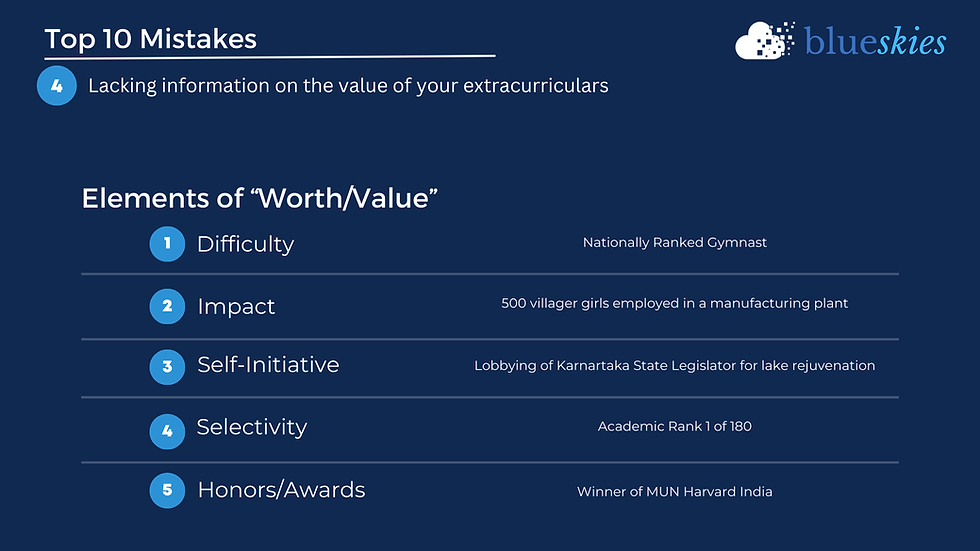
4. Not Understanding the Value of Extracurriculars
Academics alone won’t get you into top US universities. If you want to compete, your extracurriculars need to have real impact.
🔹 What you should do: Evaluate your activities based on these 5 factors: ✔ Difficulty – Is it hard to do or selective? ✔ Impact – Are you making a difference beyond just yourself? ✔ Self-Initiative – Did you create something instead of just joining? ✔ Honors/Awards– Are you winning awards or getting national/international attention?
If your extracurriculars don’t tick at least 3 of these boxes, it’s time to level up. Colleges want changemakers, not club members.
5. Over-Focusing on Perfect Grades
Yes, grades matter. But trying to get a perfect 1600 SAT or a 45 in IB isn’t always worth it. If a school’s average SAT is 1480-1530, then scoring 1500 is good enough. Those extra 100 points won’t matter as much as your essays, extracurriculars, and recommendations.
🔹 What you should do: Meet the school’s academic threshold (usually their 50th percentile), then shift focus to building an impressive extracurricular profile.

6. Ignoring Honors & Awards
Too many students ignore competitions and awards, which adds credibility to your application. Schools use them to differentiate between top students.
🔹 What you should do: Start participating in competitions early. Some great ones for international students: 🏆 Tier 1 (International): Regeneron Science Fair, Olympiads 🏆 Tier 2 (National): NTSE, Debate, MUN, Business Challenges 🏆 Tier 3 (Regional/State): Local competitions, hackathons 🏆 Tier 4 (School-Level): Best Speaker, Student Leadership Awards

7. Ignoring Community Engagement
Colleges love students who give back. If you’ve never helped your community, it’s a red flag. But generic volunteering (like tutoring younger students) isn’t enough.
🔹 What you should do: Find meaningful ways to give back. Some strong ideas: ✔ Launching a nonprofit or awareness campaign ✔ Hosting charity events or fundraising for a cause ✔ Leading a local initiative for climate action, mental health, or education

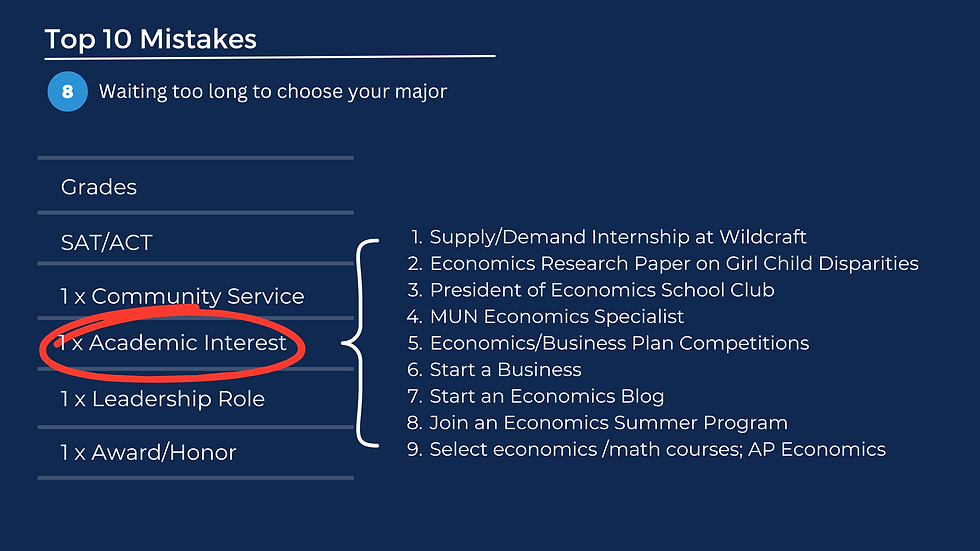
8. Waiting Too Long to Pick a Major
Even though U.S. colleges allow you to apply as Undecided, your chances increase if you show clear academic interests.
🔹 What you should do: If you want to major in Economics, prove it! Do internships, research, summer programs, or run a blog about economic issues. Show that your passion is real, not just words on an application.
9. Trying to Trick the Admissions Committee
Don’t try to fake passion. Don’t pretend a low-impact activity is world-changing. Don’t rely on a paid summer program as your biggest achievement. Admissions officers have seen it all.
🔹 What you should do: Be authentic. Colleges want students with real experiences—not applicants who checked the “right” boxes.
10. Neglecting Teacher Recommendations
Teacher recommendations matter a lot. If you don’t build relationships early, your letters will be generic.
🔹 What you should do: By 9th or 10th grade, start engaging with teachers—ask thoughtful questions, seek feedback, join school activities led by them. A strong, personal letter can set you apart.
Final Thoughts: Avoid These Mistakes & Get Into Your Dream School!
If you’re in 9th-11th grade, you still have time to fix these mistakes and build a competitive US college application. Be strategic with your academics, extracurriculars, and college profile-building strategies.

🚀 Need expert guidance? Book A Call. https://www.blueskiesprep.co/book-a-call
📸 Follow me on Instagram for Ivy League tips
Got questions? Drop a comment below! 😊
Common College Admissions Mistakes: Frequently Asked Questions
What are the biggest mistakes students make in college admissions?
Common mistakes include weak extracurriculars, unrealistic college lists, delaying standardized tests, ignoring awards, and focusing only on grades
When should students start preparing for U.S. college admissions?
Students should ideally start in 9th or 10th grade, allowing enough time to build academics, extracurriculars, and a strong overall profile.
Is focusing only on grades enough for top U.S. colleges?
No. Once you meet the academic threshold, extracurriculars, essays, and recommendations become key differentiators.
Why are extracurriculars important for college admissions?
Extracurriculars demonstrate impact, initiative, and leadership, helping admissions officers distinguish between academically similar applicants.
How can students avoid common college admissions mistakes?
Students should focus on early planning, strategic activity selection, building depth in interests, and aligning their profile with their target colleges.


Comments